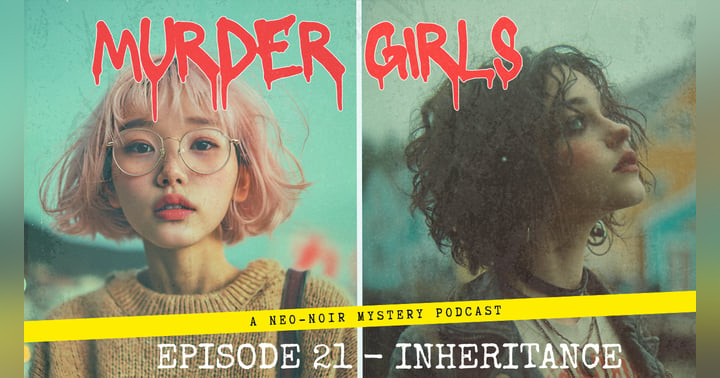
The Beating Heart(s) of Murder Girls

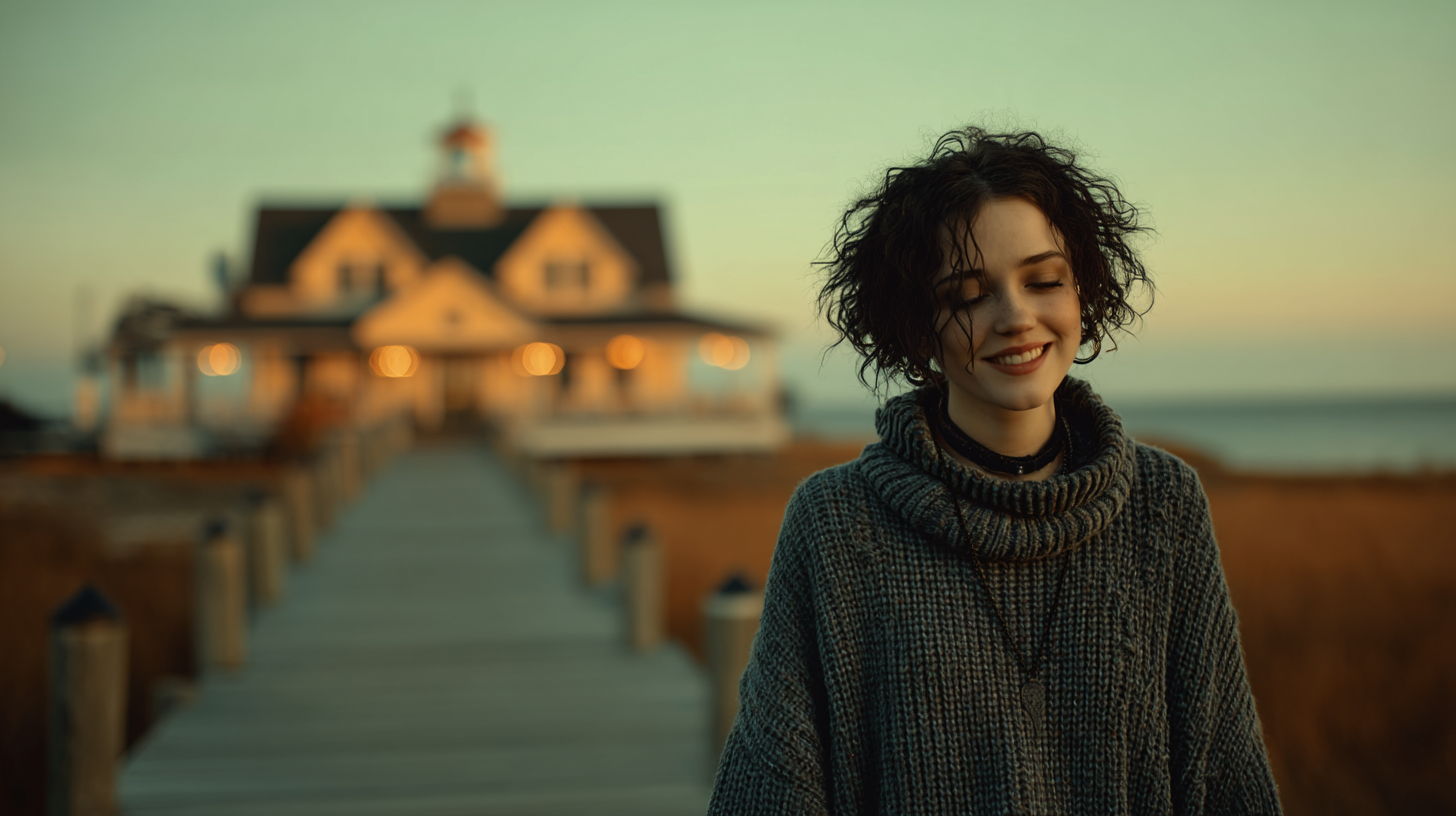
Every murder mystery needs a crime scene. Murder Girls has two: one is in Avalon Falls, and the other is the space between Mags and Amy when they’re talking around the thing they actually mean.
This all lives or dies on those two voices —- not just what they say, but how they say it.
It’s not just the way Amy deflects pain with sarcasm or the way Mags turns vulnerability into analysis -- it’s about the way they weave a deep friendship through banter and shared references and inside jokes.
That rhythm — that half-comic, half-catastrophic cadence — is the pulse of the show. It is by design and fully intentional. And that intention wasn’t to have Mags & Amy sound like other people, that intention was to have other people want to sound like Mags & Amy.
This isn’t Clockwork Orange or even Brick (I mean, dated references, but you get my point, right? :) I’m not saying I invented a slanguage or painted a modern experience with a noir brush (not totally, anyway). At the end of the day, this is just all in good fun. But I love fun banter in a show and wanted my two heroes to have that -- or at least, my approximation of that -- and for that to be the beating heart of the show.
Act One’s whole job was to get that heartbeat going.
Act One is really the story of two people relearning a shared language. Ten years of silence has made them fluent in avoidance. Every quip, every tangent, every awkward pause is them translating grief into conversation — turning guilt into rhythm.
When the show started, I didn’t realize how much their voices would dictate everything else. Every scene, every mystery beat, every tonal shift runs through their dynamic first.
It’s not just about style. The way they talk is the story. Their dialogue is how they solve cases, fight, flirt, and process trauma — often all at once. It’s the same way we actually talk to the people who know us best: never about what we mean, always about what we can stand to say.
That’s what makes their scenes so fun to write. I never know what they’re going to say until we’re all right in the middle of things. Yes, they’re always circling the same wound but from opposite directions, and when they finally meet in the middle, sparks fly — sometimes literally.
I often consider which of them I relate to more. The honest answer? It depends on the day. When I’m writing Mags, I want everything to make sense. When I’m writing Amy, I just want everything to feel like it makes sense. The show needs both to survive.
They’re each other’s worst idea and best hope. And for all the mystery, the murders, the tech conspiracies, and the fog, that’s what the story’s really about: the kind of connection that’s strong enough to outlast reason — the kind that keeps your heart beating, even when you’d rather it didn’t.
The real question going into Act Two isn’t “who killed Dylan Holt?” — it’s “can two people who speak in jokes survive the truth when it finally hits?”
That’s the heartbeat of the show. Two voices, one conversation, still ongoing.
See you in the fog.
— ET
Creator, Writer, Producer
I’m a writer, producer, and storyteller obsessed with the blurred lines between memory, technology, and the stories we tell to survive. My work lives at the intersection of noir, surrealism, and emotional realism — grounded in human experience, expanded through AI.
I am a real human person, despite lazy and kinda-frankly scary intense and fabricated reports to the contrary. (Can't believe I have to write that.)
AI is my toolset, not my stand-in. I write and direct every episode, compose the music, and shape the voices and atmosphere myself — not because I have a studio behind me, but because I don’t. I use AI voices, composition, and design not to replace artists, but to make work that otherwise couldn’t exist. I believe creative tools should amplify individual vision, not erase it — and that the future of storytelling belongs to those who treat technology as a brush, not a shortcut.
Murder Girls is a fiction podcast that is part mystery, part heartbreak, and part love letter to the strange, stubborn act of caring when the world tells you not to.
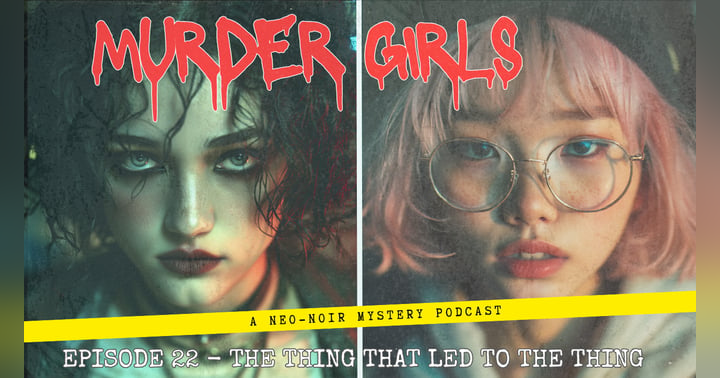
Preview of Episode 22: The Thing that Led to the Thing